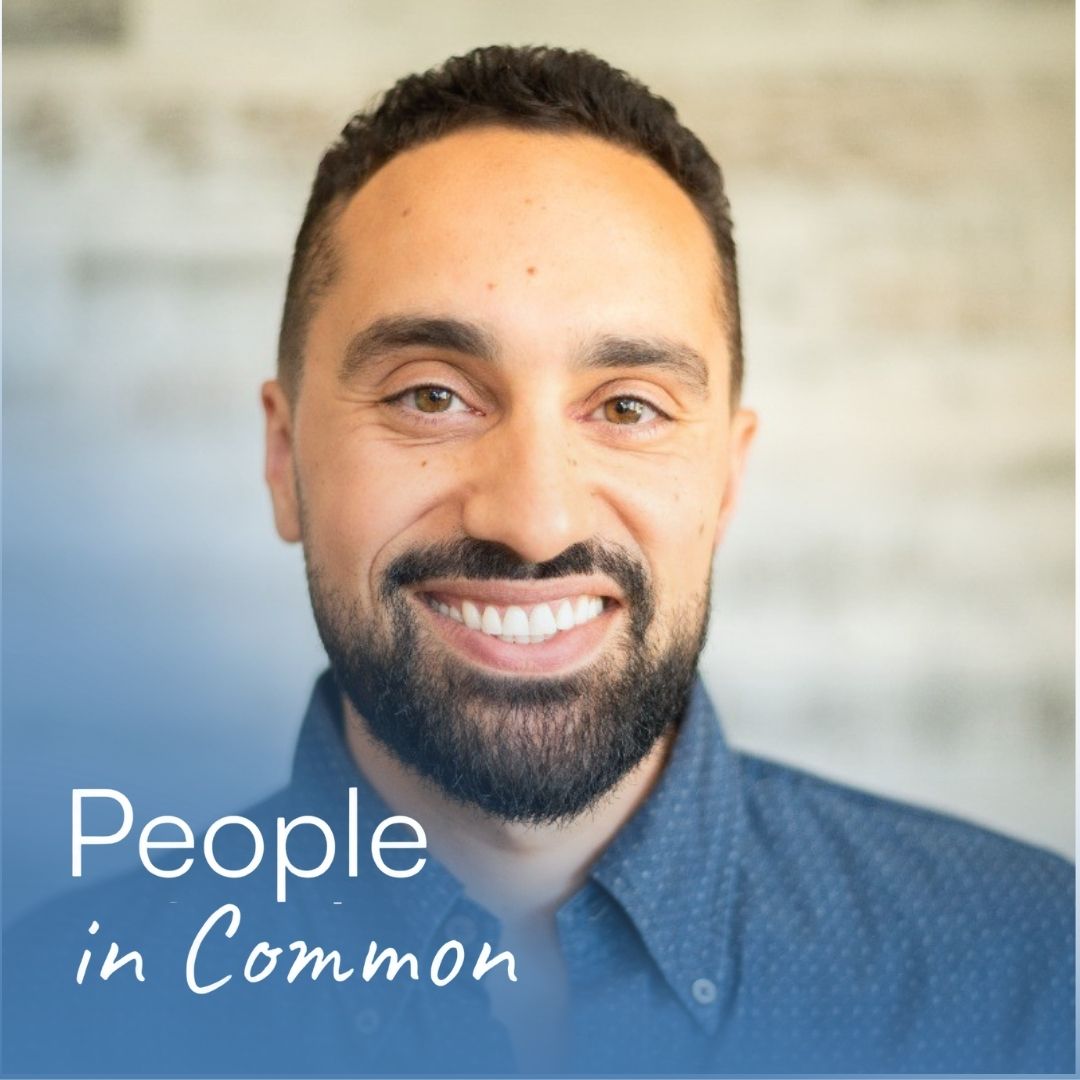
Justin Steele People in Common Transcript Recorded July 23, 2026 | Updated as of August 18, 2026 So Justin Steele, builder of Kindora.co and Outdoorithm, he didn’t wait to build the thing that he needed. He built the thing that he needed in a way that everybody else could benefit from it too. And we talked a lot in this conversation about being the change you wish to see in this world. We talked about belonging and conviction. I would say those are the two organizing principles for Justin Steele. And I think this conversation really speaks to those of us who are trying to build in a way that matters, for this crazy moment we’re living in. So for Justin that was sitting at his kitchen table, at nine at night, you know, coding the things that, now everyone can be a coder. This one is about that one idea sitting in a notebook or dashed off in a text message to a friend. Consider this episode your nudge to build. And to take a chance. To lean on your conviction, your belonging. We’ll put links to Kindora, the Wefunder investment round where you can participate, and Outdoorithm Collective, the articles that Justin wrote. We’ll put all of that in the show notes. Go build something. INTRO -- JAMA ADAMS (static open) Welcome to People in Common. I'm Jama Adams. This is a podcast where we talk to leaders about connecting their personal stories to what's happening in this moment. What are we supposed to do? How do we translate values into action? How can we be People in Common? [2:02] JAMA: Justin Steele, welcome. JUSTIN: Thank you. I'm so excited to be kicking it with you. JAMA: Let's do this. People in Common. All right. So Justin Steele spent a decade at Google.org directing nearly $700 million into philanthropy, and he and his wife Sally started their own nonprofit, taking urban families camping. They hit a wall, as all nonprofits do. They needed about ten thousand dollars for tent heaters and couldn't afford the tools to get them. Over that hump, even though he was the one giving out the millions of dollars -- you've got both sides of it now. So he built this tool. And so we're gonna talk today about Kindora, which is a tool that helps thousands find funders who really actually want to fund them, which is a key distinction. I've been hearing about this from friends who've seen the demos and are experiencing all this beautifulness. So this is really a conversation about what happens when you stop waiting for permission or someone else to solve the thing, but you just start building and see what happens. And so if you've got an idea sitting there in a notebook or something, welcome to People in Common. Welcome, Justin. JUSTIN: I'm so excited to be here. JAMA: So happy to have you. Just start us off with kind of where this idea came from, your origin story on this. JUSTIN: Yeah. Well, as you said, I got to spend a decade at Google.org. It's interesting, I was actually on the nonprofit side of the table before Google. JAMA: So -- okay, so this is actually a return to the other side of the-- JUSTIN: So I worked out of graduate school. I worked at a nonprofit called Year Up. JAMA: Yeah. That's right. JUSTIN: Yeah, I was helping young people without college degrees get into jobs at places like Google, Salesforce. And I did that for five years, and I was really doing a lot of program work. I was a community college instructor of record, I was doing direct program work with young people and then helping to run the program side of the Washington DC site. JAMA: Okay. And at some point you sort of realize you're working with the downstream impact of a lot of really tough problems in society. JUSTIN: And as somebody who has an engineering degree, has fancy graduate degrees, has access, I just felt like I have the ability to go upstream and explore where some of this is coming from. Why are these high school kids coming to me with really tough challenges that are hard to address at that point? JAMA: Exactly. You're in it with your young people and you're like, I want to help you today, but I also want to help the people coming up after you, not have to experience the same things you experienced. JUSTIN: And so I started pulling my head up and looking around and trying to figure out where's the right place for me to go. JAMA: How far upstream, right? JUSTIN: Yeah, like how far upstream do you go? And I was still like twenty eight when I started at Year Up. So by the time I'm looking up, I'm in my early thirties, and I still don't really know exactly how the world works, how power works. I'm still a little bit-- JAMA: to you thirty year olds listening, I'm sure you've got it. You're unlike Justin. JUSTIN: I definitely didn't. JAMA: Of course we did. It's so much easier in retrospect. JUSTIN: I thought I had it. But I had done some work with the Gates Foundation when I was a consultant right out of undergrad, and there was an opportunity on their Pacific Northwest team. I grew up in the Seattle area, so I was really attracted to that. But at the same time, a recruiter reached out on LinkedIn and said, this Google has this philanthropy, google.org. I only really knew of their global work and health work. I'm like a domestic urban poverty person, that's not really my -- and they said, well, we were getting some backlash around our offices in the US and people are starting to question, and we want somebody to do local philanthropy around our offices. JAMA: But you hadn't been in tech. This hadn't been part of your work despite growing up in Seattle. JUSTIN: Right. No, I hadn't worked at a high tech company, but that was their pitch. Honestly, I turned them down at the first job offer that Google gave me. I said no. JUSTIN: [continuing, per Studio 05:54 marker] But I still remember-- JAMA: And it was the right call. JUSTIN: Yeah. Jacqueline Fuller, who had actually worked at Gates Foundation before coming to Google.org, called me up. I was still in San Francisco because I had just done my interviews and they had made the offer, and I was visiting with my younger brother, who lived in San Francisco at the time. I remember sitting by the Moscone Center, and I picked up the phone and she said, look, Gates is great, but you really need to come take a bet on yourself and come here. You will discover things that are intersectional in ways that are just not possible if you go work at a traditional philanthropy. And I'm gonna up your level by a level and sweeten the offer. Sorry, we kind of lowballed you, this is your place, we really want you, and this is a better opportunity for you. JAMA: And so what was it that convinced you? What was the thing she said? JUSTIN: Okay, I guess it was the whole take a bet on yourself thing. It was sort of like: ‘If you really believe in yourself, if you think that you've got it, if you think that you really are as good as you say you are, then this is the place to come prove it.’ JAMA: ‘Put your money where your mouth is. You just interviewed and told us how dope you are. Please demonstrate that.’ JUSTIN: Don't take the safe bet -- she really did view Gates as the safe bet. She'd been there. It was the more safe, traditional path. And so I made this really tough call to that Pacific Northwest team, told them, hey, look, I'm actually gonna take the Google offer. They were so generous, and David Wertheimer, I never forget, was so gracious with me about the flip flopping. But that's how I ended up at Google. I did that for ten years. I started with local office giving, and I ended up parlaying that into a whole racial justice initiative before Donald Trump got elected the first time. JAMA: And you took the bet, and you made it true. What was so special about Google in 2014 when I started, is that it was still being run by Larry and Sergey -- it's honestly kind of hard to imagine now, in 2026, what that opportunity was like, how things were still in flow. JUSTIN: It's magical. I remember stepping off the Google bus -- I live in Oakland, but I would take the Google bus to Mountain View a couple of times a month. I still remember getting off that bus in Mountain View and walking through campus, and it was like pixie dust in the air. This place is magical, and Larry and Sergey had created this environment where the company was still founder led. They had the majority vote. They didn't really have to do what other people said. And so, really, in the philanthropy world, we had permission to roam. Which was really special. You had money because Larry and Sergey had committed one percent of ongoing net profit to charity. As Google made a lot of money, that became a pretty significant, very significant amount. So you had a lot of capital to allocate and the freedom to roam. And so I remember I had a conversation with Bryan Stevenson. JAMA: Wow. Jealous. Cool. Go on. JUSTIN: 2015. I had no idea who he was -- this was also before they made a movie about him. JAMA: Tell us who he is, just in case there's one person out there who doesn't know. JUSTIN: Bryan Stevenson is this incredible -- he's the founder of the Equal Justice Initiative in Alabama. He graduated Harvard Law School and went down into the deep South and spent his entire career defending -- he's the best storyteller I've ever seen. There was one of his former students, since he also teaches at NYU, who I was collaborating with at Google, and she said, you really gotta talk to this guy, Bryan, he's this lawyer, professor, whatever. So I remember I was in my daughter's downstairs bedroom on a Friday, working from home, and was on the phone with Bryan. JAMA: Every parent can identify with this opening. JUSTIN: And I remember talking to him and I said, look, I'm floored, like five minutes into the conversation, this guy's amazing. It's clear, the star power. Like, what should I do? I just started, I'm six months into this thing, what do you think I should do with this position? And he told me: bend the narrative. Bend the arc toward justice. The narrative around race in this country is so broken and untold, and Google's an information company -- your mission is to organize the world's information and make it universally accessible and useful. JAMA: And I remember sitting there in your daughter's bed being like, wow, yes. Mind blown. JUSTIN: My little conviction bug was like, heck yeah, let's go do that. JAMA: Sometimes somebody says it sounds like -- you're giving us two amazing stories of conversations where your whole body says yes, and you're like, that's it. JUSTIN: So then I come back to work the next week, and I remember going into Jacqueline's office and I said, I want to do the Lynching in America project with Bryan. JAMA: And Jacqueline was like -- I'm sorry, was that in the room at Google? I must have missed her too -- she didn't jump at the chance and reach-- JUSTIN: No, but to her credit, she stayed open minded about it. She was definitely like, wow, okay, that's a lot, I'm not sure we're gonna get that done, but tell me more. And I said, look, Bryan has thousands of pages of research on all of these lynchings that happened between Reconstruction and Civil Rights. They're building a memorial and a monument, and he's got some really incredible people around him supporting it. No companies are in, and our mission is exactly -- and I'll tell you, the conversation had some openness, and that openness turned into a green light for me to invite him to come speak at Google. JAMA: Awesome. And putting him in the flesh was probably the smartest move you ever made, because you're like, have you met this guy? JUSTIN: Yeah, we're doing whatever he says. Larry and Sergey would host the TGIF meeting, which at that point happened on Thursday. So every Thursday afternoon, TGIF, hosted by Larry and Sergey, and the entire company would simulcast and show up for it. And David Drummond, who was the chief legal officer at Google at the time -- his family has a deep history in civil rights, I think his mom was involved in the NAACP in Monterey Bay growing up -- he said, I'll get you a speaking slot at TGIF. JAMA: It's interesting, very few external speakers had ever really been invited to TGIF. JUSTIN: But David was like, we're gonna make it happen. And we did. Bryan came and delivered -- it's still on YouTube, you can go watch it, we'll put the link -- it was the most incredible speech I've ever heard. If you've heard Bryan, you'll be like, yeah, that's Bryan's story, but when you hear it for the first time, my God. You're just absolutely floored by it, and the audience came away on fire. The marketing team immediately invited him to their offsite and said, we wanna adopt this project. They built a whole exhibit in the museum for Bryan, and I got the green light to give him a million dollars. So that was kind of the start of me being able to say, wow, this thing at Google -- Jacqueline was right, I can take a bet on myself and do something that nobody else would have been able to put together. And that was the start. The next ten years was an interesting journey. The magic that was there at the beginning sort of faded over time, and I think it's structural, which kind of led me to build something different that maybe could last and endure. JAMA: That makes a ton of sense. Talk about structural -- obviously the entire world changed. What are a few key milestones that sparked that for you? JUSTIN: I mean, the first Trump election was like a wake up call, because at that point we had done so much work that I was like, I will tell my grandkids about this work. And it was not easy -- I shouldn't paint it as super easy. There was a lot of internal resistance. I had people sit me down and literally say, I know you've gotten some exec support to do this, but a bunch of us are gonna have to clean up this mess once the press comes for us, and this is gonna create policy headaches. JAMA: Wow. JUSTIN: Because-- JAMA: Because Google.org obviously has this incredible capital influx from the one percent of profits, but it's very much a separate thing -- there's a whole corporate situation happening over here, and none of those people-- JUSTIN: Yeah, it's right. So, well, one of the things that happened around that time -- Trump gets elected the first time, Google reorganizes to Alphabet. JAMA: I forgot. Unrelated, obviously, but also kind of meta. JUSTIN: Exactly. So now you've got Alphabet, and Larry and Sergey transition out of day to day management. Sundar is now the CEO. They bring in Ruth Porat as a Wall Street CFO. A lot of the original executives and employees that founded the company at that point sort of exit. So the company's changing. JAMA: Yeah. JUSTIN: The world is changing. Regime change with the election of Trump the first time. And Google also sunsets its foundation -- we used to have a foundation we gave out of independently. JAMA: Yeah. JUSTIN: But we-- JAMA: That was not part of what you were giving. JUSTIN: It was not, well, yeah, it was like our bank account a little bit. But it's significant, because if you have a 501c3 foundation you're getting money out of, there's a firewall between the money that comes through that vehicle and what the company can actually benefit from. There's a lot of rules around that. JAMA: Right. JAMA: [Studio 16:41 marker] The nonprofit rules in general, what is it, in your mind -- like, what I forget-- JUSTIN: You basically -- there's no tangible benefit, you can generate marketing brand halo, but you can't sell a product, you can't lobby with the money, that kind of thing, because then you're not considered a nonprofit anymore and you lose the tax benefits. JAMA: Because then you're gonna lose that status that allows the tax benefits. JUSTIN: But in -- so Alphabet reorganizes, Trump gets elected, and the Google Foundation sort of -- you used to have to go get Sergey to sign off on things, which is like good luck, even his direct reports had to wait outside his office just to grab him when he was walking out. So, pros and cons of founder led organizations -- there were a lot of reasons why it made sense to actually bring all of that giving back inside the company, still giving mostly in a tax advantaged charitable way, but the vehicle changes. So there were just a lot of changes, and I think I started to realize, companies are always gonna follow the external environment to some degree. And so I watched us not completely step away from projects like Bryan's, but it definitely changed -- the tenor changed. It became much more focused on data science and rigor versus the narrative piece of it. It was like, well, the Center for Policing Equity is doing all of this research on policing, we'll fund that. It's less activist oriented, less movement oriented, and more just, hey, let's study the data. JAMA: So that all changed. And how was that for you? Because that's clearly not how you roll. What was that personal journey like, and what seeds was it planting for what became-- JUSTIN: Well, look, I wasn't naive signing up for a Google -- you're working for a company, right, so your job is to hold the tension. You drive value for the company, you drive value for society. I'm not somebody who came in feeling entitled to just do social impact work and not think about the company. But the extent to which I have a business degree, and I went to Harvard Business School -- it's like the West Point of Capitalism. I get it. I put myself through that on purpose. JAMA: Talk about that decision. JUSTIN: Yeah, I was looking at Stanford and Harvard for business school, and I really knew I was gonna spend my career in the social sector at that point. I'd worked at Bain and Company for a while, so I'd done the for profit consulting, felt the hard edges of that -- it was an amazing experience to learn, but hard edges. You're like, this is not me, this is not where I want to spend my whole career doing this. But I really wanted to keep pushing myself. I didn't want to go to a graduate school where I just felt super comfortable. Once I got to Harvard Business School and looked across the river at the Kennedy School, I was like, I want to do that too, because that actually felt very me. I ended up doing the joint degree, but I didn't apply to the Kennedy School at first, I just went to the business school. JAMA: Was it almost forcing yourself to do the West Point of Capitalism? JUSTIN: It was also a sense in which I knew, from a little bit of experience in the world at that point, that as you tried to negotiate a seat at the table, if you were a social impact person, it was super easy to be marginalized. Honestly, even when I showed up at Google, even though I had worked at Bain and gone to Harvard Business School, because I had just come from a nonprofit, I had executives tell me, well, this is the Olympics, and I know you're used to doing nonprofit work, but you're welcome to the big show. I was like-- JAMA: Wow. JUSTIN: -- kind of spent a lot of time in the big show, but okay. I just knew there's a stigma, like you don't get it. You're not-- JAMA: I felt it for sure. I think a lot of people can identify with this. It's like a pat on the head, kind of adorable that you want to help the world. But like, we're doing real stuff, big boy stuff over here, so if you could just scoot to the side. JUSTIN: That's exactly -- so I felt like going to business school for me was partly, you can never say that I don't belong at the table. JAMA: Interesting. JUSTIN: I'm gonna get this credential. JAMA: I'm gonna get the credential like everybody else. JUSTIN: And I'm gonna accept -- I'm not gonna just barely make it through, I'm gonna get honors, I'm gonna show that I can do this here too. JAMA: This feels like maybe a personality trait, Justin. I celebrate it. Is that conviction? JUSTIN: Yeah, I think I knew that I needed to navigate both at Google. I didn't come in thinking -- that was her pitch, and certainly something that's true-- JAMA: You're gonna live in the seam. JUSTIN: And I feel like I've spent my whole life living in the seam. JAMA: Ooh, and identify with that. JUSTIN: No, for me it changed. I think the regression of big tech towards the mean of just publicly traded companies, investor control, the pressure businesses face -- by the time AI commercialized and ChatGPT launched, there's pressure on the business, the business is changing. And I realized there was very little structure protecting the mission of Google.org. There was a commitment, and a founder's letter, like an IPO letter that said we're gonna commit 1%, but that's not legally binding, that's the founder's letter. It's marketing, really. JAMA: That's right. That's right. It's what it comes from, and history is littered with the bones of organizations that were promised by founders. JUSTIN: Absolutely. And I don't want to downplay it, that was an incredible commitment, and I would tell people every day, man, Google is one of the most generous companies on the planet. This one percent commitment is incredible -- not just one percent of equity, volunteering, and product like other companies, but one percent of profits. Incredible, so generous. But not legally mandated or protected. And what ends up happening, I'm realizing now as a founder of a public benefit corporation and spending time with other founders, is if you don't structure it, then all of this missional commitment is really marketing and aspirational, and when it gets down to it, you're not protected. And when people decide to come for the actual -- it's like Eric Ries's new book [Incorruptible] talks about the golden goose metaphor. JAMA: Such a good book. Incorruptible by Eric Ries. Get the book. JUSTIN: You know, Google.org is a golden goose -- incredibly valuable monetarily, but also the value it's created in society with all of that money was truly incredible. But it's tempting for whoever's in control to go slaughter the goose. JAMA: We know how that fable ends, right? And it's the reason there's a public benefit corporation. Let's go -- I mean, so you can start the founding story wherever you want, but I think that's a great place to start, which is you needed to set up an infrastructure that actually protected the mission of your organization. Because you watched it-- JUSTIN: Right. JAMA: -- kind of drain away, right? JUSTIN: That's right. That's right. And by the time I finished at Google, I realized if you don't protect it structurally, then it's up to the whims of whoever is in control. And I really mourned the loss of some of what we had in the early days. And so when I transitioned out of Google, I sat my kids down in the living room in Oakland and said, I'm leaving Google. JAMA: Which by that point had been some of their whole lives. JUSTIN: Yeah, yeah -- they had the Google hats and the Google sweatshirts, but it was funny, because my seventh grader -- I'm watching their faces, I'm like, are they gonna feel-- JAMA: As a parent we can all identify with that. JUSTIN: I have four daughters, and my little middle one was in seventh grade at the time. When we moved to Oakland and I started at Google, the kids were five, three, and one, so this had been some of their whole lives. I don't have another job lined up, this is financially -- all the things. And I'm wondering, are they gonna-- JUSTIN: My seventh grader Zadie raises her hand, which is a little bit like, you don't need to raise your hand, but okay, Zadie, what's your question. JAMA: There's six people in this family, I get it. JUSTIN: Zadie goes, can you go work at Apple so I can get an iPhone finally, we're sick of the Android universe. JAMA: My God. You sort of forget -- of course they're thinking, are we gonna be okay, is dad gonna be okay, is it gonna be stressful -- but really they're just like, can I get an iPhone? JUSTIN: So I said, well I didn't think of that, let me see if they have a job. I was definitely trying to figure out what I wanted to do, but my heart wasn't in another big corporate role. I wanted to create something in the world that could have the kind of beauty and magic that I saw at Google.org, that I saw at Year Up, that I saw at other organizations I worked with, but protected. So the first thing that we did -- my wife and I co-founded it, it's both a social enterprise and a nonprofit, Outdoorithm. The social enterprise side is outdoorithm.com, and we mapped every public campground in the country. We scraped every public review, and we help people figure out where do you want to take your family, what's the fit, how do we get you out on public land. It's incredible out there, we all own it, and the information is super hard to find. Even within a couple hours of where we're sitting right now, there's hundreds of incredible public spaces -- that's partly because it's run by Sonoma County, State Parks, National Parks, National Forests. In a twenty five mile radius, it's like a hundred different entities that are not running on huge budgets. So we created a platform to pull all that into one place, and I started coding again with AI, which was really cool. JAMA: I didn't know you were an engineer before I started looking up all this. JUSTIN: Yeah, I was an engineer -- obviously all engineers have to learn how to code in college. I was a chemical engineer, so I took my coding classes and spent most of my time in the chemistry lab. But I retaught myself how to code with AI when ChatGPT dropped, and that's how we created outdoorithm.com. We had this whole thesis of, people need to figure out where to go, what to bring, and whether they belong in those spaces. My wife Sally and I co-founded it, and we felt like we were doing a pretty good job of those first two -- we have like 60,000 monthly active users on the platform now. But we didn't feel like we were getting the belonging piece right. JAMA: Interesting. JUSTIN: You could put up pictures, you could tell stories, but we didn't feel like we were really changing the narrative. Back in Oakland, we still couldn't convince our friends to come camping with us -- they're like, that's the cool thing you guys do, but weird. JAMA: So first you built the tech side, and you did a great job of it, sixty thousand people, but then you were like -- which I just want to highlight, because that is the moment we're living in on steroids, don't you think? Where we all go around thinking, if there's a tech solution, we could just fix it, and you're like, nope. JUSTIN: Totally. And this is a little bit of my wife and I both coming out of the social sector -- my wife's an ordained minister, she led this nonprofit called City Hope, a faith based program in the Tenderloin in San Francisco for eight years, she was a co-director. So we're both coming out of nonprofit spaces and we're both a little burned out. I think we were both a little bit like, we don't really have the energy -- we have four kids, do we have the energy to run a nonprofit program, we're like, let's do the tech thing, which was super cool. But like I said, it didn't hit the belonging. So at some point we pulled up, like a year in, and we were-- JAMA: Can I just interrupt to ask -- so you actually knew you needed to do the hard thing? You guys both knew in your hearts that belonging was the problem you were solving, but you also, like so many of us, were like, no no no, we'll just do this part because it feels -- because we know how hard it is to run programs. JUSTIN: We've lived it, I don't want to do that. And you have to fundraise, and all of your time is spent fundraising. JAMA: Spoiler alert, we're gonna solve that. JUSTIN: And so, at some point we were like -- and everybody told us not to start a nonprofit. They said, don't do it, you guys are crazy, why would you have a social enterprise business and a nonprofit, go get fiscally sponsored -- which we tried, but the folks we approached weren't interested in fiscally sponsoring, and honestly, that's such a nightmare, a whole other conversation. So we just started it, but then we had this problem where we were like, okay, now we gotta fundraise, we actually have to capitalize the thing. And that's where Kindora, our AI fundraising platform, was born out of. It was February of twenty twenty five. I still remember, we were sitting in the living room, the girls had finally gone to sleep, this is like eleven o'clock at night, and my wife and I are planning our President's Day trip. It was the first time we were gonna take people camping in the winter. Now winter in California isn't like winter, but it's still cold, depends on where you go, we have big mountains, it's raining. We had to have the right gear. JAMA: The problem you were solving is, a lot of people don't want to camp if you have crappy gear. JUSTIN: Exactly, you need good gear. We had this reservation at Alice Eastwood group camp right outside of Muir Woods, Mount Tam -- such an amazing group camp, but it's gonna be cold and damp in the redwoods, we need heaters, all the hot chocolate in the world will not solve that problem. We know our people, we got people coming out from Stockton and Oakland. We needed heaters, and we had actually built ourselves a little heater in a box off a YouTube tutorial, and then the company we bought the unit from actually started producing these amazing heaters in a box. JAMA: I won't bore you with camping gear all day, but you came up with a concept and now they actually produce it. JUSTIN: They produced it. This company started making them, and we're like, this is amazing, but they were two thousand dollars -- expensive, like any prototype. But we felt like, if we're gonna take people out on their first camping trip and it's gonna be in the winter, we need to have these heaters so that people don't get too cold at night, because our point is to keep them coming, not scare them away. So we needed to buy five of these heaters, which was ten thousand dollars, and we barely had enough money to even do that. So that's what got us like, we gotta fundraise, we gotta get serious about this. It was literally eleven o'clock at night, and I started googling fundraising, prospecting platforms. JAMA: As an expert, that's the craziest part of the story to me -- you'd sat on both sides for ten years and didn't know how people were finding you. JUSTIN: I didn't know. If I did, I would have solved that problem. So we signed up for the major platforms -- one was a six thousand dollar annual membership, the other was a four thousand dollar annual membership. JAMA: Which hopefully there's the ROI, but how do you know -- ten thousand dollars for an organization? JUSTIN: We had thirty thousand in the bank at that point -- ten thousand on heaters, ten thousand on prospecting tools, we got ten thousand left, and we're not paying ourselves anything. That's where we were. And when I opened up these tools, look, they were good to a degree, but I literally had thirteen thousand matches out of the tools. I called up my salesperson at one of the companies, who put me in touch with an engineer, because I was like, I'm clearly missing a filter or something. JAMA: Exactly. JUSTIN: And they said, nope, that's the best you can do -- and they weren't using AI at all at the time. There was no AI. GPT had been out for over two years at that point. So I was like, this is -- now I've been using AI for outdoorithm.com for years, I've coded the whole platform. So I created my own Python script -- I went in with Cursor at the time. JAMA: I know, I was gonna say, even since then, it's like night and day. Spoiler-- JUSTIN: Yeah. JAMA: --alert, you can do this all. Yeah, you do it-- JUSTIN: yourself. So I just opened up Cursor, created a script, and personified myself as a program officer, used Perplexity to research every one of those thirteen thousand, and the foundations gave-- JAMA: They give you a report, like, okay, all thirteen thousand cannot be great matches for this, obviously. JUSTIN: So I told the AI model, you are a program officer at this foundation, this is who you are based on the public profile. JAMA: Giving the AI a role -- that's just, as a separate point, giving your AI a role changes everything. JUSTIN: Absolutely huge. JAMA: Still. And even in the early days it was even more so, but still to this day. JUSTIN: Yes. So I knew enough, because I'd coded a lot with AI, give it a persona -- these are your thirteen thousand personas, and now, one by one, I want you to go through and look at Outdoorithm Collective and tell me whether you're interested -- don't give me a hundred point scale, just tell me, do you want to do more due diligence or not, yes or no, that's it. Ninety five percent, absolutely not, and they were super polite about it too. The models were like, “I really admire what you're doing, you guys are doing such great work with family…” JAMA: But it’s outside our programmatic areas. And you're like, my god, that's what I told so many people over and over. JUSTIN: So I got rejected twelve thousand times. And then I took the computer-- JAMA: Like this is literally a problem that a human could -- like, humans. This is a perfect example of human scale versus AI scale. That scale is-- JUSTIN: You couldn't. It's just my wife and I and a small board of directors. So then you're left with a much smaller set. And then I took another model and I scraped the remaining foundations' websites. JAMA: What's your values? JUSTIN: Yeah, historical grants. And now that list of a thousand dropped down to a hundred. We spent our whole year just applying to grants with those hundred, submitted about 50 applications, and we won a hundred thousand dollars. For us, that was everything, because that's game changing. JAMA: It's just the start. JUSTIN: And it just takes one. This is a literal needle in a haystack problem. JAMA: And a human cannot be as good at this as the matching system. JUSTIN: The moment I knew it was gonna work is that at the top of the stack of those hundreds was the George Family Foundation. I saw it was Minneapolis, and I was like, is this Bill and Penny George's foundation? Because Bill George is a Harvard Business School professor, Center for Public Leadership, and I was a George fellow. JAMA: Stop. JUSTIN: Yeah, I was like, my God, wait. I hadn't talked to Bill since graduate school, it was like 15 years. I emailed Bill and said, I left Google, I founded this thing, your family foundation is at the top of the list of this thing I just created. He immediately replied and put me in touch with the president of his foundation, and we had a call the next week. Now, we weren't a fit -- turns out they only give to organizations with budgets of a million dollars or more, which isn't published. So this is what-- JAMA: How would you ever know that? JUSTIN: Kindora can only get you so far, you actually still have to do work. But to me, I was like, wow, I would have never -- I didn't even know they had a family foundation, let alone that they were focused on wellness, faith and spirituality. My co-founder is my wife, she's an ordained minister -- literally, this is the intersection. Outdoorithm is not a faith based program, but I view nature as a sacred space. JAMA: Absolutely. JUSTIN: And I think regardless of your religious affiliation-- JAMA: Totally. JUSTIN: -- it's sacred out there. How could you be amongst redwood trees and not feel that. JAMA: That's what I knew was gonna work. JUSTIN: And that's how Kindora got born, was me just trying to create something for ourselves. JAMA: One of the coolest things about Kindora is you offer all kinds of different products, and I want you to talk about all of them. One thing I was playing with was -- you can upload your own contacts, and I assume your biography, your resume, all of that stuff, because the tools you were using didn't know you, so that was you, the human, being like, wait, is that Bill George -- but your tool now solves for that. JUSTIN: Yeah, well, the evolution was, the first version of Kindora is what I just described -- funder matches, which foundations might be a fit. The first feedback our users gave was, that's cool, but I want to know what open RFPs and grants are actually available, because, guess what, they say they fund the arts and they haven't done that in twenty years, or they might be invite only, and in fact, most are. What we found in our database is 13% of the foundations in our database offer open grants. So 87% of the foundations in our database have no record of open grants available, ever, in their history -- you literally have to know someone. Now, of course, the long tail of foundations are tiny and small, so we're not talking 13% of the dollars, but still. And a lot of those are run by one person, or barely half a person, so you gotta know somebody. JAMA: You're aiming to be everything, across the whole globe eventually. JUSTIN: We're working on it -- we have Europe, Canada, United States, we just added Australia. Somebody was in my LinkedIn feed this week like, where's Southeast Asia, and I'm like, I'm trying, do you have a list you can point me to. Different parts of the world and different countries have different relationships with what even philanthropy means -- that concept is kind of weird, like, well, you would just take care of your neighbor, dude, or the government handles that. So it's totally different country by country. But it's over 200,000 foundations in the database, and the vast majority have no open grants. We crawl them every weekend -- we go to every funder's website, look for the needle in a haystack, is there any open grant mentioned anywhere. That's the thing our users at first most wanted. But then the thing that quickly followed was, this is great, JUSTIN: Now I'm raising money from institutions, but individuals is really where the money is and the opportunity is -- can you help me fundraise among individuals. JAMA: This AI wealth boom that's here, coming as OpenAI and Anthropic go public, SpaceX goes public -- philanthropy has been talking about the wealth moment for a while, but this one feels pretty crazy. JUSTIN: And you're seeing this philosophy of, our companies already do good in the world just with our products, so we're not necessarily gonna give tons of philanthropy away JAMA: I can't trust myself to be rational when I address that argument. JUSTIN: But you hear it all the time. JAMA: You hear it all the time. JUSTIN: And the tech sector has migrated here very heavily -- our product is fundamentally philanthropy JAMA: You’re welcome. JUSTIN: Our business is philanthropy -- which sort of leaves a lot of the onus of giving back onto these individuals whose wealth is being created by the companies. If you buy that argument -- and I don't, to be clear -- even if you do, great, then get that other pocket ready, because of all the things you've just created for yourself. So this is where we are. A lot of these founders, like at Anthropic, have committed something like eighty percent of their wealth to charity. So in the same way that Google committed as a company at its IPO, now you've got individuals committing to it, which is gonna create a lot of cash in the space. Most of us know it's gonna get parked in donor advised funds and probably not move, but it's still gonna be in the ecosystem. JAMA: Just to clarify, for those who don't live in the DAF world, meaning you're now a centamillionaire, you've just been paid out for being an early employee at one of these companies, and the first thing you do is go park that money at a foundation, like Fidelity, whatever one of these big investment firms all have places where you can just park it, and call it charitable, and let it sit there. JUSTIN: Because otherwise you're gonna get taxed on it. JAMA: I think that's the craziest part that people don't understand. We as taxpayers are like ‘you're doing such good work that we don't think you should pay taxes on any of this money.’ Like, 80% percent of quote unquote philanthropic money is not actually being -- it's just sitting there in a bank account making somebody else money. JUSTIN: The whole industry, Fidelity, Schwab, have huge business around this. I sit on the board of the San Francisco Foundation, we have a lot of donor advised funds. I think community foundations are doing a better job of getting the money moving. JAMA: That’s true, let's not paint with a complete broad brush. JUSTIN: But still, there's still that dynamic JAMA: this isn't about evil and good, this is about incentives. JUSTIN: It gives all of us an opportunity to say, I think these folks are waiting to be asked into deeper purpose, into generosity. JAMA: And THAT is what Kindora solves for. JUSTIN: So we're working hard on it, and we did it first for Outdoorithm Collective, because again, we realized we need to solve our own problems. JAMA: You were solving your own problem! JUSTIN: So Sally and I downloaded all of our LinkedIn connections -- under GDPR you can just download all your LinkedIn data, first name, last name, LinkedIn URL -- and we did public searches: what homes do these people own, what's their work history, education history, what have they posted on social media, giving history. Kindora has every trustee, every board seat, everything. JAMA: Yeah. JUSTIN: We took our 4,000 connections, and had Kindora say which of these have the capacity to give at a meaningful level, have some affinity for our topic, and -- the third piece -- relational density. JAMA: Yeah. JUSTIN: We gave it permission to crawl Gmail, text messages, calendar, so it figured out, these are the people you actually are close to, and this is what the relationship looks like. JAMA: Interesting. JUSTIN: We ended up with three hundred of the four thousand that the model said, you're close to these people, you should ask them. JAMA: Yeah. JUSTIN: Of the three hundred, thirty got individual one on one notes, texts. JAMA: Yeah. JUSTIN: Three weeks -- a hundred and twenty thousand dollars raised in that campaign, more than all the money we'd raised from institutions the prior year. JAMA: Wow. JUSTIN: People we had no idea had donor advised funds. We had this magical day where we went down to the post office on Park Boulevard in Oakland, opened up our PO box, which is usually empty, and there were six DAF checks in there. And we were like-- JAMA: my God, it's incredible. JUSTIN: And all people were just waiting to be asked into their own network. JAMA: Wait -- into the ask in your own network. JUSTIN: And so we immediately started building that toward a Kindora product, where we said, let's give people the opportunity -- not, we're holding a bunch of data on wealthy people and telling you here's who to hit up, but, who is your network. JAMA: Right. What privacy things have you built into Kindora, and you know the back end -- how, what is that back end, and how do you convince people what the lines are? JUSTIN: We use Supabase as our back end, all the data stored in the United States, and security -- your servers, and we have client segregation. When you upload your contacts, we're not putting that into a shared database -- not everybody's reading Justin's Gmail. All of that information is yours. If you and I both have the same donor, Kindora is paying twice, because I have to enrich that person for you, and enrich them again for me -- it's separate. If we did it the other way, you'd be a data broker, and there's all kinds of regulation around that. But we're not a data broker, we don't have a central database of wealthy people for you to search -- we search your network and help you figure out where to go. We had one user give us every single board member's LinkedIn connections -- 30,000 connections, and we enriched every single one of them. Around the coming wave of wealth from the tech companies, I did this with a client last week -- we searched every Anthropic employee connected to their board members, and there were 70 of them. So we said, your board members, these 70 people who work at these companies, you should start reaching out and developing relationships, because a lot of them are about to have a major wealth event, and they know your board members. So let's facilitate the ask -- that's what we're trying to do with individuals, build off of existing lines of trust, because that's how people give, at the speed of trust, and it's relational. JAMA: So how do you make those relationships legible to people and facilitate the asks happening? JUSTIN: This was really fun -- it's literally, here are the five next steps you need to take, and this is why, because their spouse happens to work at blah blah blah, so your first step, since you know them so well -- honestly, it's terrifying to ask people for money, it's been one of the hardest parts of being on the other side of the table. But having Kindora go through all my connections gave me some courage. It seems silly, but seeing it look at my network and say, these people would be excited to hear from you, they have capacity, they have alignment, you have a relationship -- that gave me the courage to do it. Of course there was the occasional person who said, please take me off this list, and that's like a knife to the heart, your brain only thinks about that person instead of the fifty who were happy. That happened to me more than once. But the vast majority of people said, I'm so happy you're doing this, I want to be part of this. JAMA: You're talking about belonging -- that's a theme throughout this conversation, and the wanting to be asked. Because People in Common exists with the mission to meet this moment -- people wanting to be asked to be part of something. We know all the data reasons for this, right, bowling alone, we don't go to religious gatherings, we're missing all of that in our modern lives. But why do you think people want to be asked to be part of something? JUSTIN: It's interesting, because All of this stuff is very hard, and being a founder is so hard. I think about What motivates me every day to keep doing it -- the first thing is conviction, which we've already talked about, but the second piece is belonging. I think we all want to belong to something, find communities of people that reflect our values and make us feel alive, and to me, belonging is a big part of the reason why I do what I do. With Outdoorithm, it's about family and community belonging. With Kindora, philanthropy means love of humanity, that's literally what it means. I think that when people have the opportunity to be asked, to be generous, and to connect in that way, they come alive -- they'll be happier and healthier for it, and feel like they belong to a broader community. But it's hard -- that kind of enlightened self-interest isn't immediately obvious, and it takes real effort to make that case to somebody. I hope Kindora takes some of the friction out of that. I dream about the day where more and more people are generous, and it doesn't feel like the scarcity, the zero sum mindset -- if I give to you or ask this donor, they'll never give to someone else. There's so much abundance in this country. That's this AI wealth moment -- ideally, the tools of AI serve humanity, make our time more abundant, and free us up to do more. JAMA: So that's the goal, the ideal, but also the actual money sloshing around in the system is a lot of abundance. JUSTIN: And Edgar Villanueva -- I love him, he wrote Decolonizing Wealth, has been a philanthropist and continues to be -- he talks about philanthropy and money as medicine, it can heal people and it can heal the giver, it can heal these attitudes. I really believe that. For Kindora, that's the thing -- if we can start to get some of this capital to move, yes, it'll solve problems and we'll have more impact, but I think a lot about the individual level, what it means for people to be more generous, to give in abundance, for all of us to feel less scarce. I think that's a good thing in the world to have. JAMA: One of the motivating mantras of this podcast and movement, the People in Common ethos, is really -- Mother Teresa said, if we have no peace in the world, it's because we've forgotten that we belong to each other. And so the dream scenario you're talking about is the antidote to that -- offering people the chance to be their best selves isn't only going to fund nonprofits and all these worthy goals. What does it mean for you personally? How has your life changed? Is your stress level different? JUSTIN: I mean, I'm alive in a way that I feel like I've never been alive, at least professionally. JAMA: Wow. That alone. Drop the mic. JUSTIN: It's the best way I could describe it. If I had another ten hours in the day, I'd take it and keep building. I feel so alive, but I also feel like I have less agency to rest. There are times I wish I could choose rest -- these entities you're building are so fragile in the world, it's like raising a baby, you're dependent on them for everything, and you can't -- you will rest eventually, but you're in a phase of building, and obviously my wife even more so than myself, but there are just seasons where you don't have the agency to choose rest if you're trying to raise something into the world. And I miss my paycheck, honestly -- money isn't everything, but money can do a lot if you use it well. It's actually been really cool in this season with my own children, because as a parent, it's very different to tell your child "no, I can't" versus "no, I won't," and there's a lot more "no, I can't" in this season than "no, I won't." I think it's actually been really good for my kids, but challenging -- it requires more energy as a parent to say, I don't have the resources to do the thing you're asking, and I know you really want it, but I literally can't. JAMA: Got it. JUSTIN: When they're asking for stuff -- back to school shopping, or can we go back to Hawaii -- I really can't, because I'm building this important thing. JAMA: Because-- JAMA: How much do they know about-- JUSTIN: They know, of course. I put them to work. I had this, for Outdoorithm the other day -- one of the things we're doing on the platform is categorizing public reviews and figuring out sentiment. We've created what's basically a Negro Motorist Green Book version for campgrounds. JAMA: I was hoping you would bring the Green Book into this -- such a rich history, a literal book that said, this is a place where African American families can feel welcome and safe. JUSTIN: What's really fascinating is, we have about two million public reviews of campgrounds, and we can actually use AI to figure out where people feel unsafe or unwelcome. But you wanna make sure you're tagging those things correctly, that the model is actually getting it right -- there's a lot of nuance in how people write about this stuff. JAMA: And who writes, who's not going to post about a terrible situation, or a really good one, right? JUSTIN: We were doing this work last week, and I code a lot with Claude Code now, and Claude Code was suggesting, let's take four hundred of these reviews and review them by hand. JAMA: Mm-hmm. JUSTIN: I don't really have time to do 400 by hand, but my tenth grader is just brilliant, she's got an engineering mind, and she's basically a co-founder of Outdoorithm with us. JAMA: Wow. JUSTIN: So I told my daughter, I'll pay you fifty dollars an hour to go through and look at these reviews -- I'm gonna look at some too, but I want you to use your judgment, human judgment-- JAMA: Yes, human judgment. JUSTIN: Did somebody actually feel threatened or uncomfortable in this review, did the AI get it right. The good news is that 90% [of the time], Jalen and the model agreed, so there was high overlap. But the kids are in it, and I think they get to see-- JAMA: They're building it with you. JUSTIN: Yeah, they get to see Sally and I creating something and choosing something different. JAMA: Right. I know for a fact, just from hearing friends and neighbors and family-- JUSTIN: Yeah, that is such a rare gift, to be able to explain this to children, but then for it to be super meaningful, like life's work and being alive in a way. JAMA: Talk about the spillover good effects of that as a parent -- this generation is terrified about what they're gonna do. JUSTIN: My kids are a little young to be thinking quite that far ahead, but they're starting to already feel like, are there jobs for our generation, what's gonna happen. So I think it's like teaching the kids how to take agency, how to build something, how to be an owner and not purely dependent -- and it's a privilege to be able to do that, but to not be completely dependent on the traditional, let me go work for a big company, how's that gonna work out for you, they're laying everybody off. So I think it's powerful. JAMA: I want to mention how you're funding this -- first of all, you're a public benefit corporation, which we'll put a link to explain. But basically, as you said, building the mission in -- the way you're funding Kindora is also -- you're trying to. JUSTIN: So far it's mostly been funded out of my own retirement, which is a little -- I'll be honest, I've shed some tears on a couple of occasions, just feeling so vulnerable, spending down my family's retirement. I feel really privileged to have a retirement in the first place, but it still feels -- I'm out of savings, so we're really down into retirement, and it just feels like, am I doing the right thing. It's emotionally and financially vulnerable. And so we're at the point where we're ready to start external fundraising, but boy, what a gauntlet to run. The thing about being a public benefit corporation is it gives you liability protection -- not to get sued for pursuing mission, because that's in the corporate documents, it's in the charter. But it doesn't require your company to do that either, so if your board and staff and investors take that as, hey, they can't sue you, that doesn't mean the company itself can do whatever it wants. You have to publish once a year, an impact statement, so you do have to say, hey, I did some good in the world. But really, there's other structures you have to bring in, and I think the biggest thing is who finances you -- that's really what it comes down to, for every company. That's why it's so important to get the right kinds of people and the right kinds of money. Your shareholders as a public benefit corporation might not be able to sue you and say, you're not pursuing profit hard enough, but there's a lot of other ways the company can get taken out from underneath you, and the mission can seep away. So we decided to raise on Wefunder, a crowdfunding platform, and we posted it this week. It's still in a bit of a quiet phase, it's public, but it'll launch more broadly in the September timeframe. We're letting people sign up now if they want to reserve a place in the raise, and we'd still like traditional investors to come in. We're doing a revenue share on top of a SAFE note -- I won't get into all the mechanics of investing, but basically equity, and if we start making money, we want to pay you out of some of our revenue, so you don't have to sit around and wait forever for us to get acquired. If we're successful and decide that's not the exit we want, we'll pay you out of revenue, and you can get returned that way, and you still hold the note that gives you the right to own part of the company if we ever do sell. I don't know that anybody else has done it quite this way. My lawyer keeps telling me, Justin, you only have so many idiosyncrasy credits to be different in this game -- you might spend all your years just trying to be a PBC and do impact work, and now you're trying to do something different again-- JAMA: because it doesn't fit. It's the same thing you were talking about with funders -- I fund this thing, you have to have a million dollars in budget, it's all herd -- and investors are the same, maybe more so. JUSTIN: So that point makes a lot of sense. I also think, the counter is, hey, have you seen -- it's not really working great, guys, perhaps it's time to try some different-- JAMA: Right. Things are going great. JUSTIN: Totally. I know there's a different way to do it, and the vehicles exist -- foundations can give PRIs, program related investments. JAMA: Right. JUSTIN: There's donor advised fund holders who can also make PRI investments in companies like Kindora out of their donor advised funds. There's a lot of vehicles, they're just not widely used. JAMA: That's right. JUSTIN: And so I think we're trying to -- I feel like I'm walking through the woods, blazing a new trail, trying to follow other people's trail, but I'm like, is this a trail, or is this a game trail? JAMA: Do only deer use this? JUSTIN: In the meantime, off in the distance, I see a five lane highway, cars zipping down on a traditional VC fundraising route, and it's very tempting to just walk down to the highway and jump on it. But I feel like there's gotta be another way, and I don't want Kindora to become beholden to only maximizing profit. To be clear, we want to be financially successful-- JAMA: people are gonna pay for this tool because it's really useful to them, and, I mean, God, we're off to the races, we're already successful-- JUSTIN: but I wanna be able to preserve the mission and continue to share the value with the community, with employees, not just have all the value cordoned off to founder and investor. JAMA: Yeah. JUSTIN: It's hard though, it's different. It's-- JAMA: well, and there's opportunities for nonprofits specifically to get involved. Like you said. JUSTIN: Yeah, the WeFunder campaign is open to anybody who wants to own a piece, and the minimum investment is a hundred dollars. JAMA: Wow. JUSTIN: So it's really just -- normally, the only people who'd have access to a deal like this would be accredited investors, who've qualified their wealth and become accredited, and they'd probably put in a minimum twenty five thousand dollar check. JAMA: Right. JUSTIN: So this is a way to say, you don't have to be accredited, you can put in a check starting at a hundred dollars and own a piece of this, and if it's phenomenally successful, everybody gets paid out. I hope a lot of our nonprofit and social sector users will do that, because then they can own the product they use. JAMA: It's -- and it aligns everybody's incentives to keep coming back. I truly believe if you wanna understand anything, you look at the incentives, you look at the structure, and you're trying to put together-- JUSTIN: that like everybody's aligned. We all want this to be successful because it's gonna make the rising tide lift all boats. That's right, it's not zero sum. JAMA: That's right. JUSTIN: But there's no easy path, because I've been talking to traditional investors this week and they're like, it's cool, but it's different. How many have you done, I've done-- JAMA: When you said you launched this week, I was like, hmm, so many. JUSTIN: So many. And I really love the folks that I'm talking to, and I can see them trying to wrap their heads around it, and decide honestly whether they have the time to try to understand it. People are busy, and investors move from one deal to the next, and taking the time to understand a slightly different instrument, like a revenue share on top of a SAFE note, requires a little extra effort. Not everybody's gonna want to make it. JAMA: Right. Right. But you are in the mix. JUSTIN: I'm in the mix, man. I am in the mix. I'm deep in the mix. JAMA: You are. JUSTIN: You are. We could go all day, but I just one last question -- like, how do you, what do you say to somebody who has a great idea, who feels part of this conversation and wants to do something? What does that look like? JUSTIN: Yeah, it's complicated, because I'm in the middle of the woods myself, honestly -- I haven't found my way out to the other side. JAMA: Sure. JUSTIN: And I'm different. I feel I'm a little bit like Bear Grylls -- you drop me into the woods. But not everybody's got all these survival skills and the equipment, so I don't want to be idealistic and say, yeah, anybody should just drop into the woods and find your way. It's scary out here, it's hard to find your way. But for those of us who spend a lot of time in nature -- you are alive, you're deeply alive. I was telling a young person who asked me to do a mentorship call last week -- he's about to go into business school, and he's following my story, and he said, I want to do exactly what you're doing, Justin. And I was like, it was so cool, and also-- JAMA: mmm, few tweaks. JUSTIN: If I'd had the resources and the network, I would have-- JAMA: done this earlier. JUSTIN: But the truth is, I didn't. I didn't have enough capital, and I don't think I had enough access. Even having gone to elite schools, worked at Year Up, I didn't have a deep network of people with wealth. The friends and family round of a startup assumes-- JAMA: that all of your friends and family are very, very well off. JUSTIN: And my friends and family from Harvard Business School were still mid-career. JAMA: Getting off their feet, too. JUSTIN: Yeah, they're making a little money, but not enough to cut big checks -- they're the 1%, but not so much so. So what I was telling him last week is, to the extent you're able to amass a little bit of capital, a little bit of security, build a network -- do it as early as you can. Jump into the woods and come alive and find your way. It's a beautiful thing to build something in the world, but I don't want to be naive about the fact that you could die in the woods. JAMA: There's real danger. It's not-- JUSTIN: There's trade offs. There's trade offs. And if you're raising kids -- I don't know if my wife and I could have done this when our kids were really little, it's just the bandwidth to raise five babies at the same time. But the older girls now, we have a five year old, but our older girls are like second parents. And they let us know, they're like, this is still your child, right? And I'm like, look, all over the world people raise kids communally, older siblings raise younger siblings. JAMA: My mom's the oldest of eleven, so--go give her that back. JUSTIN: So I just don't know if we could have done it in these other seasons. Everybody's situation is different -- if you've chosen not to start a family and you have a little financial safety net underneath you -- I didn't really have that, so I was kind of like, if I really messed this up earlier in my career without creating my own safety net, there's just not a huge net underneath me. But God, what an incredible thing to be a builder in this moment. JAMA: That's such an incredible time in history to just be building new things. JUSTIN: It is crazy and there's chaos, but that's kind of the cool time to build, because they've torn everything else down. So what are you gonna build in its place, and I'm kinda like, make it up. JAMA: You can define the new. JUSTIN: Yeah. JAMA: That's so full circle, right? When Jacqueline and Bryan both gave you those words of wisdom, what was the part in that you think he -- the royal "he," the avatar of him -- is taking hold in this moment? JUSTIN: Yeah, I mean, there's definitely truth to taking a bet on yourself -- what bigger bet could you take than literally taking no salary and trying to build something brand new into the world? And then there's a deep conviction of trying to bend the arc, what Bryan was saying. I think I get up every day -- I was telling my co-founder this just this week -- I would not work this hard for money. Never. JAMA: That's right. JUSTIN: I would never work this hard for money. JAMA: That's so crazy. JUSTIN: But to be part of a community, to be building for other people, to breathe something new into the world that means this much to people -- the stories I get every day, of tiny little grassroots organizations who'd started to lose hope they were ever gonna be funded to do the thing they believe in, because they just want to be doing the work. JAMA: Because they just want to be doing the work. JUSTIN: Yeah. And so all of a sudden, Kindora is like turning on a light in a dark room. They're like, wait, there are people out here who can support our work, and you're helping us bridge relationally and leverage our networks. But I would never build this hard for money. It's a crazy journey, and it's not something you can do unless you have the conviction, otherwise I don't think you can go this hard. JAMA: Right. Right. And you came alive. What could be more important than that? In this crazy moment we're all living through, what do we want to tell our kids -- what do we want to show? JUSTIN: Show our kids, maybe, way better than tell them. There was an article in the San Francisco Standard a few weeks ago -- this classic San Francisco/Oakland trope, where the Standard was basically like, what's wrong with Oakland, San Francisco's booming, Oakland's struggling. And I wrote a reaction piece on LinkedIn, because I couldn't help myself -- it was literally midnight, I was coding, jumped over to LinkedIn for a second, and this article popped up, and I was up till two in the morning writing the piece. JAMA: I feel like Justin's good work happens late at night -- that's the theme I'm getting. JUSTIN: But the thing I said was, look: You can be in a city that's booming, but it can be lonely and empty, and you can be in a city like Oakland that's struggling and it can be so full of life. That's Oakland. I'm not trying to paint over the fact that Oakland's got a lot of problems, and I'm not trying to romanticize them -- there's a lot of really hard edges and suffering that shouldn't be happening. But there's a lot of beauty in the struggle, in a way that's just different than when you're sitting in the ivory tower. I live in both, I live in the seam between all of these worlds, and I'm telling you, having occupied all the spaces: Oakland is alive. Nothing against San Francisco, I've worked in San Francisco for a decade, I've lived there, it's a great city. Oakland is alive in a different way. I think there's something inside the struggle, inside the friction, inside the beauty of people belonging and coming together inside the struggle that changes things. To me that was a big metaphor for everything I'm doing -- yeah, you could be at Google, you could have the salary, you could be at Harvard, you could have all the things, and that's wonderful. But there's a piece of being alive inside the struggle, inside community, doing something with purpose, that's just different, and I wouldn't trade it. I just wouldn't. JAMA: My god, we have to end it there, that was so powerful. Justin, you are a very wonderful human. You are in the struggle, you are offering belonging, you've created that belonging. You bet on yourself, and it's paying off. So the world is grateful. JUSTIN: What a joy to talk to somebody who sees it. OUTRO -- JAMA ADAMS (static close) Thanks for listening to today's episode. If you enjoyed what you heard, please subscribe at jamaadams.com. It really helps other listeners discover the show. You can find People in Common on all major podcast platforms. We'd love to hear from you on social media. Until next time, take care.